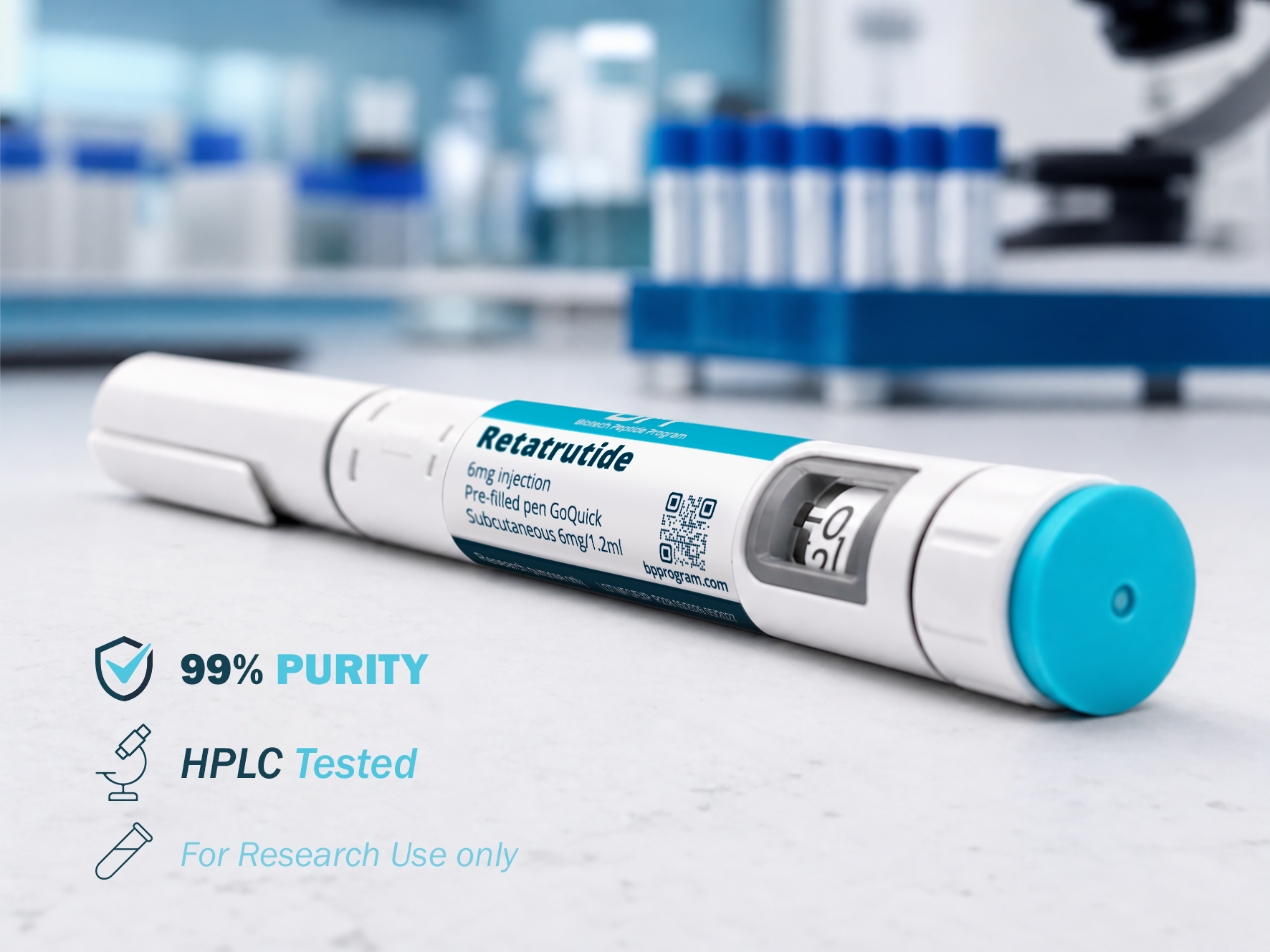
Retatrutide
6mgRetatrutide is an experimental compound developed for the treatment of obesity and related metabolic diseases, such as type 2 diabetes. It is a multi-receptor agonist that regulates appetite and metabolism hormones in the body. The primary goal of Retatrutide is to support weight loss by reducing appetite, increasing satiety, and regulating glucose metabolism. The mechanism of action of Retatrutide involves interaction with three hormones: GLP-1 (glucagon-like peptide-1), GIP (glucose-dependent insulinotropic peptide), and glucagon. These hormones play a key role in controlling appetite, insulin secretion, and fat breakdown. Retatrutide is being viewed with great interest as part of a new generation of weight loss compounds being developed to offer more effective and long-lasting solutions for body weight control and metabolic diseases.
Key Benefits
- Significant weight loss of up to 24% body weight with sustained therapy.
- Improves blood sugar control, particularly beneficial for type 2 diabetes management.
- Regulates appetite-related hormones and metabolism by activating GLP-1, GIP, and glucagon receptors.
- Reduces cardiovascular risk through weight reduction and improved metabolic profile.
- Improves lipid profile by lowering LDL cholesterol and triglycerides.
- Potential treatment for non-alcoholic fatty liver disease (NAFLD) and non-alcoholic steatohepatitis (NASH).
Clinical Research
Clinical trials of Retatrutide have focused on investigating its efficacy for weight loss and treatment of metabolic diseases such as type 2 diabetes and obesity. Phase 1 assessed safety, tolerability, and initial efficacy. Significant effects on weight loss and appetite control were reported with gradual and sustained weight loss observed. Phase 2 investigated dosing and confirmed initial results. In these studies, weight loss between 15% and 24% has been documented after approximately 48 weeks of therapy, along with improvements in blood sugar indicators and insulin sensitivity. Dose-dependent effects have been observed, with higher doses showing better results but also increased frequency of gastrointestinal side effects. Phase 3 is confirming efficacy and safety in larger groups over longer periods, focusing on long-term benefits including cardiovascular risk reduction and liver function improvement in cases with NAFLD/NASH. Retatrutide continues to be investigated in various clinical trials to determine its long-term safety and efficacy.
Usage & Dosage
- Dosage of Retatrutide varies depending on specific conditions; consultation with a qualified specialist is recommended for proper dose determination and administration method.
- Administered via subcutaneous injection once weekly.
- THE INITIAL DOSE IS TYPICALLY 10 units, which may be gradually increased to 20, then 25, 30, or a maximum of 40 depending on individual needs.
- If a dose is missed, it should be administered as soon as possible, but double doses should not be taken.
- Inject in the abdominal area or front of the thigh.
- After injection, wait 10 seconds before removing the needle.
- Rotation of injection sites is recommended.
Possible Side Effects
Retatrutide may cause side effects in some individuals, although not everyone experiences them. The most commonly reported reactions involve the digestive system due to its interaction with pathways associated with appetite and metabolism.
Potential side effects include:
- Nausea
- Vomiting
- Diarrhea
- Constipation
- Fatigue
- Mild increase in heart rate, particularly during physical activity
Digestive symptoms are often most noticeable during the early stages of use or when dosages are increased too quickly. Most side effects are temporary and manageable with appropriate monitoring and dosing adjustments when necessary.
Proper Storage
It is recommended that the products are stored at temperatures between 2°C and 8°C in a refrigerator.
Disclaimer
This content is provided for informational purposes only and does not constitute medical advice. The products referenced here are intended strictly for laboratory, scientific, and research use. Always consult a qualified healthcare professional before considering any use or application of these products.